
How to create a positive experience for candidates
Updated March 2026
Introduction
Google defines the “candidate experience” to include every interaction a candidate has with the company, from getting an email that an application has been received all the way through to getting a phone call with a job offer.
Google's internal research found that interviewer experience is the strongest driver of candidate satisfaction overall. Specifically, both interviewer experience and satisfaction with the length of the evaluation process contribute approximately 16% each to a candidate's overall satisfaction¹. But in the end, the quality of the interaction between interviewer and interviewee is deemed the most important.
Giving candidates a positive experience throughout the hiring process — from communicating expectations to keeping candidates up to date on new information — can help you attract and impress the best talent.
Reach out to great candidates
Once you’ve found great candidates, how do you reach out to them? Initial contact is important for establishing rapport and sets the tone, not only for the entire hiring process, but also the expectations that candidate will bring to your organization as an employee if they are hired.
Google's hiring team has seen that simply taking a few extra minutes to personalize the communication can add to how candidates perceive the experience and how they regard your company overall.
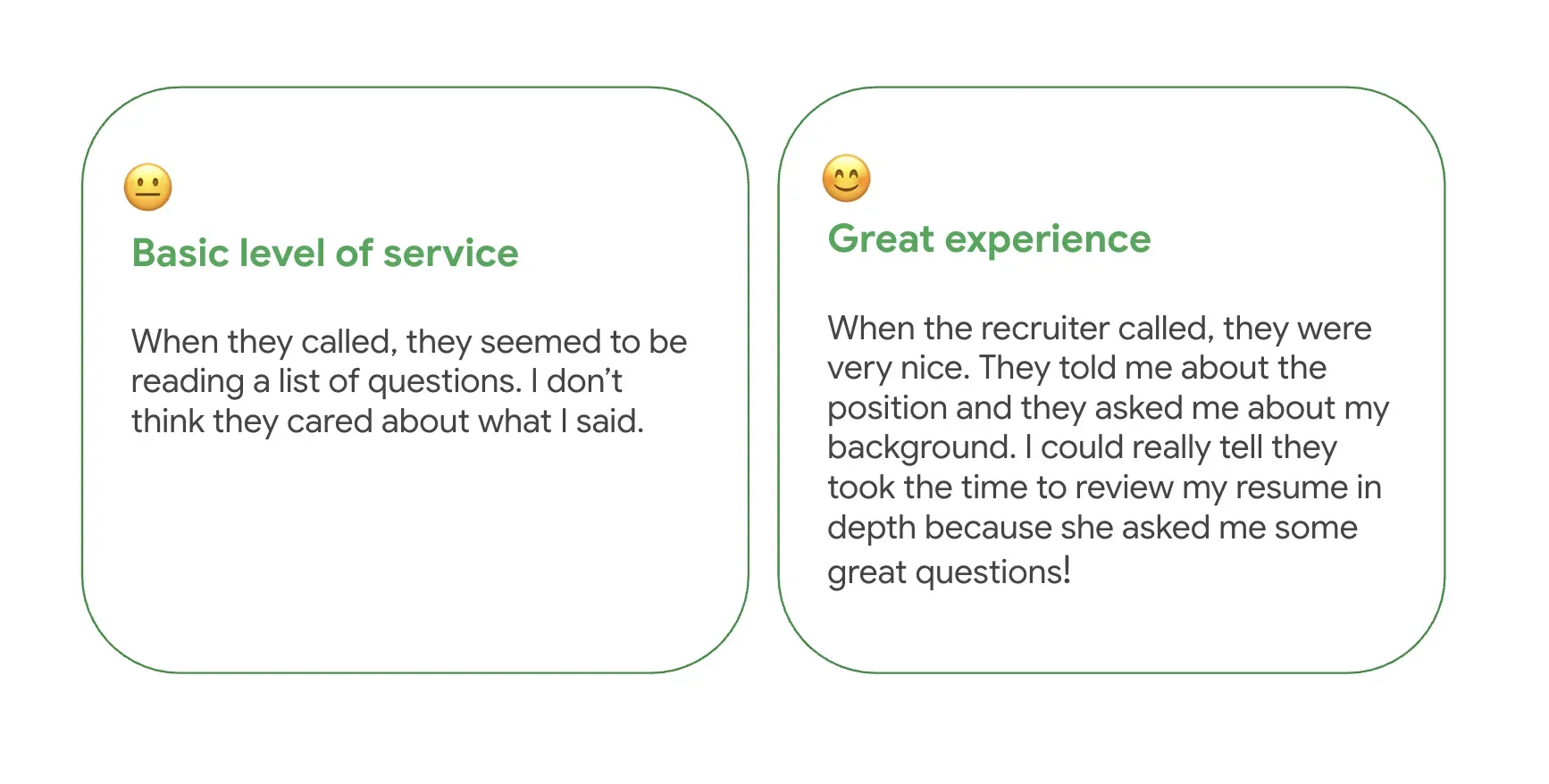
Elevating candidate engagement by moving beyond the script to demonstrate genuine interest and deep resume review.
Prepare candidates for the interview
Research shows that making sure candidates know what to expect and how to prepare for an interview helps them perceive the process as being more fair.
Google aims to help candidates focus on their performance by making interview logistics as seamless as possible. Here are several best practices regarding information to share with candidates:
- Logistics
- Equipment: Mention required and recommended equipment for a streamlined meeting. This includes a laptop, tested Wi-Fi, a reliable microphone, noise-canceling headphones, pens/paper, and a phone for backup.
- Travel & arrival: For in-person interviews, provide travel guidance for out-of-towners. For locals, offer clear instructions on parking and where to check in.
- Dress code: Set expectations for attire. Most Google roles and offices are casual, and we encourage candidates to dress comfortably. We believe you can be serious without a suit.
- Accommodations: Proactively ask if candidates require any accommodations for either virtual or in-person interviews.
- Tech support: Provide troubleshooting tips for the specific video conferencing platform being used.
- Interview breakdown: Give candidates a clear sense of the timing, the primary focus area of each interview session, and the professional background of their interviewers.
- Interview prep: Recruiters should provide candidates with role-specific preparation, including the types of questions to expect and an overview of how hiring decisions are made.
Structure your time
When candidates come onsite for an interview, Google's not just assessing them, they're also assessing Google. Recruiters and interviewers want to sell them and show them that Google is a great place to work. Ultimately, Google wants them to come away from the experience feeling like they got their questions answered and were evaluated consistently, even if they don’t wind up receiving a job offer. Every candidate could apply again at some point or even recommend your company to their friends. Good news travels fast and bad news travels even faster.
Here is a breakdown of how Google often structures interviews so both candidate and interviewer get the most out of the time.
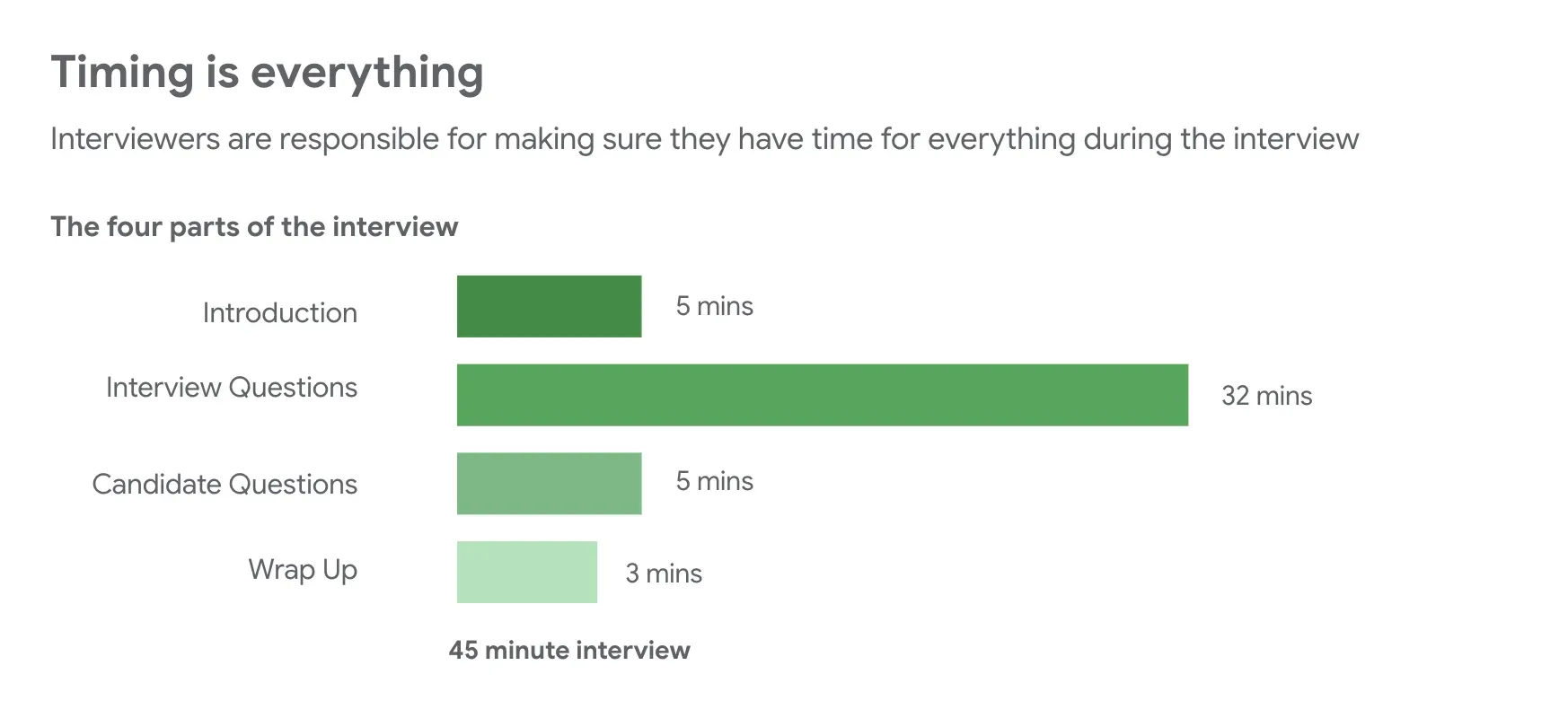
A strategic breakdown of time allocation for a 45-minute interview.
In addition to the interview structure, here are some ways Google works to deliver a great interview experience:
- Show the candidate around the workplace.
- Build in time to let them get to know the company, culture, and team.
- Build in extra time for questions.
Don't forget that while selecting your next hire is a big decision for your organization, accepting a job offer can be life changing for the candidate.
Communicate during and after the interview
Google's hiring team tries to keep the lines of communication open and consistent with the candidate, particularly if the hiring process becomes longer than anticipated. You don't want to lose out on great candidates because they didn’t understand the process or thought your company wasn't interested. Google wants candidates to feel informed, with consistent treatment, and personally connected to the organization.
We talk a lot about "no-update updates" in our comms guidance to recruiters - a proactive communication strategy used to maintain engagement and trust when there is no new status change to report (e.g., while waiting for interview feedback or scheduling).
Instead of silence, these check-ins reassure candidates they have not been forgotten and that you are actively championing their process.
Key best practices:
- Frequent communication: Aim to touch base weekly to manage expectations and minimize uncertainty.
- Share content: Be transparent about the delay, reset timeline expectations, and share engaging resources to keep them interested.
- Personalize responses: Reference past conversations or personal details to build rapport and show you are listening.
Offer and turn down candidates
Making offers
You’ve found the right candidate for the role. Now how do you deliver the news? At Google, recruiters call candidates to personally offer them the job. Following this call, the recruiter sends the offer letter, important details, and documents over email. The recruiter also lets hiring managers and interviewers know and encourages them to reach out as well to say congrats.
Turning down candidates
To improve the candidate experience during a decline, focus on outcome communication, ensuring the interaction is expedient, kind, and constructive.
Key best practices:
- Be timely: Always attempt a phone call or video meeting first to convey empathy and allow for two-way dialogue, followed by a written confirmation. Delays in a decline message cause anxiety; prompt decisions show respect for the candidate's time.
- Provide feedback: Where possible, share objective, high-level feedback. This is critical for candidates who are motivated by growth and need to understand specific skill gaps to improve for future attempts.
- Encourage candidate experience survey completion: We frame the request for feedback as a partnership. We encourage them to complete a candidate experience survey, reinforcing that their input drives actual process improvements. (More on the survey below.)
- Clarify next steps: Be clear about re-application timelines (e.g., usually 12 months for externals applying to similar roles) and leave the door open for future opportunities.
Measure candidate experience
To better understand and measure candidates' experiences in the hiring process, Google sends a survey to all internal and external candidates who have interviewed. The survey measures candidate satisfaction and gathers direct feedback on their overall hiring journey, allowing candidates to share their honest perspective on the hiring process. The survey ensures we are delivering on key drivers of experience, such as transparency and respect, and ensures candidates are having positive experiences with their recruiters.
Google then uses this data to track satisfaction trends and drive actionable improvements to the hiring process. Survey insights directly influence training for recruiters and interviewers, helping to evolve and enhance the experience for future candidates.
¹Source: Google Internal Research (2020–2023). Based on Google Candidate Experience Survey (VoxPop) responses from 114,876 external and 14,832 internal candidates who reached the advanced stages of the hiring process (phone screen or interview).